
The Mistake Most Homeowners Make First
When people think about winterizing a garage door, the first instinct is almost always to grab a tube of caulk or a roll of weatherstripping and seal up every gap they can see. It's tempting because it's cheap, it's quick, and you get that satisfying feeling of visible progress. But a fresh strip of rubber on the bottom of the door doesn't do much if the real problems are happening somewhere you can't see: springs that have gone stiff and brittle after a long dry summer, rollers packed with months of dust, or an opener that's never been tested with a dead battery. Sealing the obvious gap is the easy 20% of the job. The other 80% is what actually keeps water, cold air, and expensive repairs out of your garage this winter.
Why This Matters More Here Than People Think
After a long dry season, driveways and garage interiors around here tend to collect a layer of fine dust, sometimes mixed with residue from wildfire smoke drifting through earlier in the year. That grit works its way into tracks and roller bearings all summer long with nobody noticing, because nothing gets wet enough to show it. Then the first real winter rain hits, that dust turns into a gritty paste inside the track, and suddenly a door that opened smoothly in October is grinding, sticking, or slipping off-track in December. Add in the normal temperature swing between a warm fall afternoon and a cold, damp winter morning, and metal springs and cables that were already fatigued are far more likely to fail right when you need the door most.
A Realistic Pre-Winter Checklist
1. Clean the tracks before you lubricate anything
Wipe down both vertical tracks with a damp rag to pull out accumulated dust and debris, then check that they're still straight and properly aligned. Only after they're clean should you apply a silicone-based garage door lubricant to the rollers, hinges, and springs. Skip WD-40 for this — it's a solvent, not a lubricant, and it actually strips away the grease that's already protecting those parts.
2. Inspect springs and cables for wear, not just function
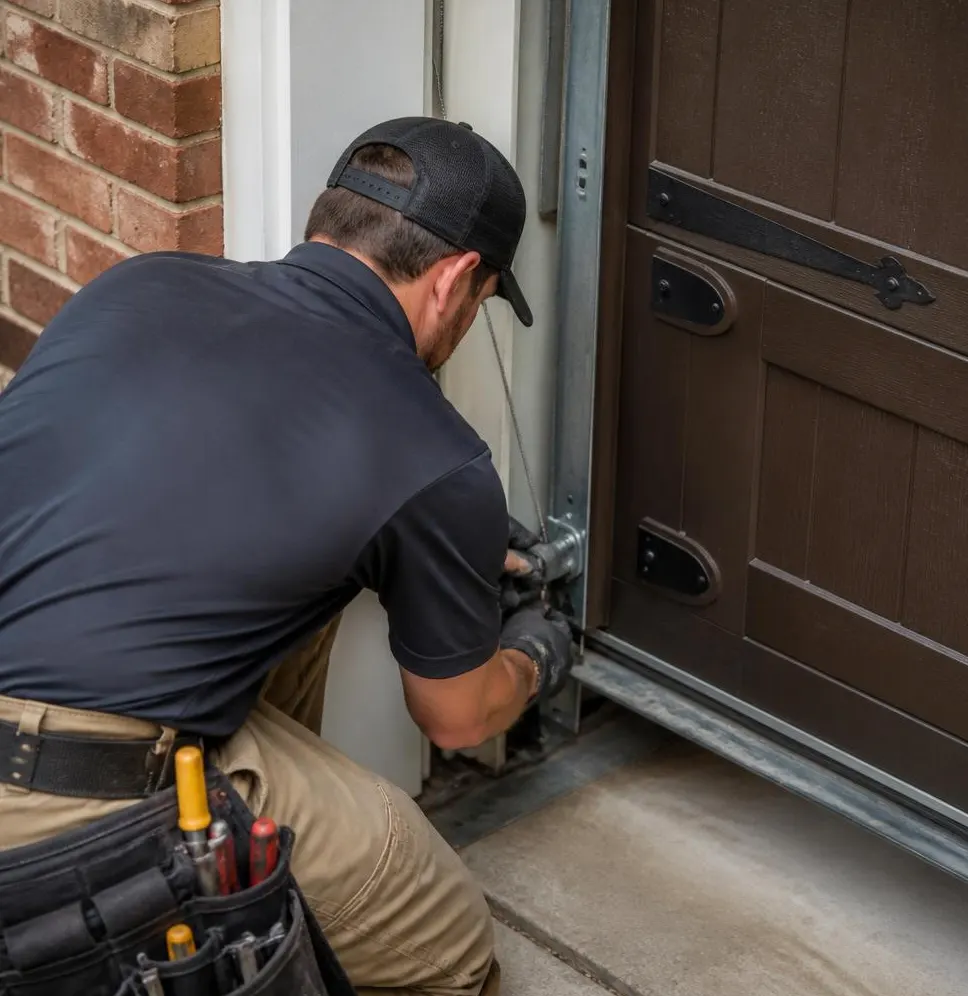
A spring doesn't have to be broken to be a problem. Look for visible gaps between coils when the door is closed, rust spots, or any stretching that looks uneven. Fraying cables near the bottom bracket are a sign they're close to snapping. Springs are under extreme tension and are not a safe DIY repair — if you see wear, that's a job for a technician, not a weekend project.
3. Replace weatherstripping, but check the whole seal
The rubber strip along the bottom of the door does wear out and crack after a summer of heat exposure, so replacing it is a reasonable job. But also check the vinyl seals on the sides and top of the door frame, since gaps there let in both rain and cold air, and they're often overlooked because they're less visible from inside the garage.
4. Test the opener and its safety features
Run the door through a full open-and-close cycle and listen for grinding, hesitation, or uneven movement. Test the auto-reverse safety sensors by placing something in the door's path while it's closing. If your opener runs on battery backup, replace it now rather than finding out it's dead during a power outage in the middle of a storm.
5. Check the slope and drainage right outside the door
Standing water pooling against the base of the garage door is a common issue once winter rain starts, especially if gutters or downspouts are directing runoff toward the driveway instead of away from it. A small adjustment to a downspout extension now can prevent water from pooling against the door seal all winter.
When to Call Paramount Garage Door
If you've gone through this checklist and found a spring with visible wear, a cable that's fraying, or an opener that's hesitating or reversing on its own, that's the point to stop and call in a professional rather than push through it. Our Spring Replacement service handles worn or damaged springs safely, under the proper tension equipment, and our Garage Door Maintenance visits cover a full inspection of tracks, rollers, cables, and hardware so small issues get caught before they turn into a door that won't open on a rainy morning.
If your garage door needs a pre-winter once-over, call Paramount Garage Door today and we'll get it ready for the season, right here in Paramount, CA.