
The Cost of Waiting Another Season
Every fall, the sun starts setting earlier, and that extra hour of darkness in the late afternoon and early evening is exactly what opportunistic burglars rely on. A garage door left vulnerable isn't just a risk to tools and bikes — it's often the fastest route into the rest of the house, since the door connecting the garage to your living space is rarely built or locked like a real front door. Put this off through another season and you're betting that no one tries the easy way in before you get around to fixing it.
How Burglars Actually Get In (It's Rarely the Door Itself)
Most garage break-ins don't involve smashing anything. They exploit small gaps and habits homeowners don't think twice about.
- Coat hanger fishing: On many standard garage doors, there's a small gap above the top panel. A thin wire or coat hanger can be slipped through to snag the emergency release cord, which pops the door off the opener and lets it be lifted by hand in seconds.
- Prying the bottom corner: Older doors, especially ones with worn weatherstripping or a track that's slightly out of alignment, can be pried up just enough to disengage the safety sensors or pop the door off the track.
- Old fixed-code remotes: Openers manufactured years ago often use a fixed code that doesn't change with each use. Inexpensive code-grabbing devices can capture and replay that signal. If your opener still uses physical dip switches to set the code, it's likely in this category.
- Stolen remotes from parked cars: A garage remote clipped to a visor or sitting in a cupholder is an invitation, especially for cars parked in driveways overnight.
- The forgotten interior door: The door between the garage and the house is frequently hollow-core, unlocked, or missing a deadbolt entirely, because homeowners assume the garage door itself is the only barrier.
The Fixes That Actually Work
None of these require a full door replacement, and most can be done in an afternoon or with one visit from a technician.
- Shield the emergency release: A simple plastic or zip-tie cover over the release mechanism (sold cheap, roughly $10–$20) blocks the coat-hanger trick without affecting how the release works in a real power outage.
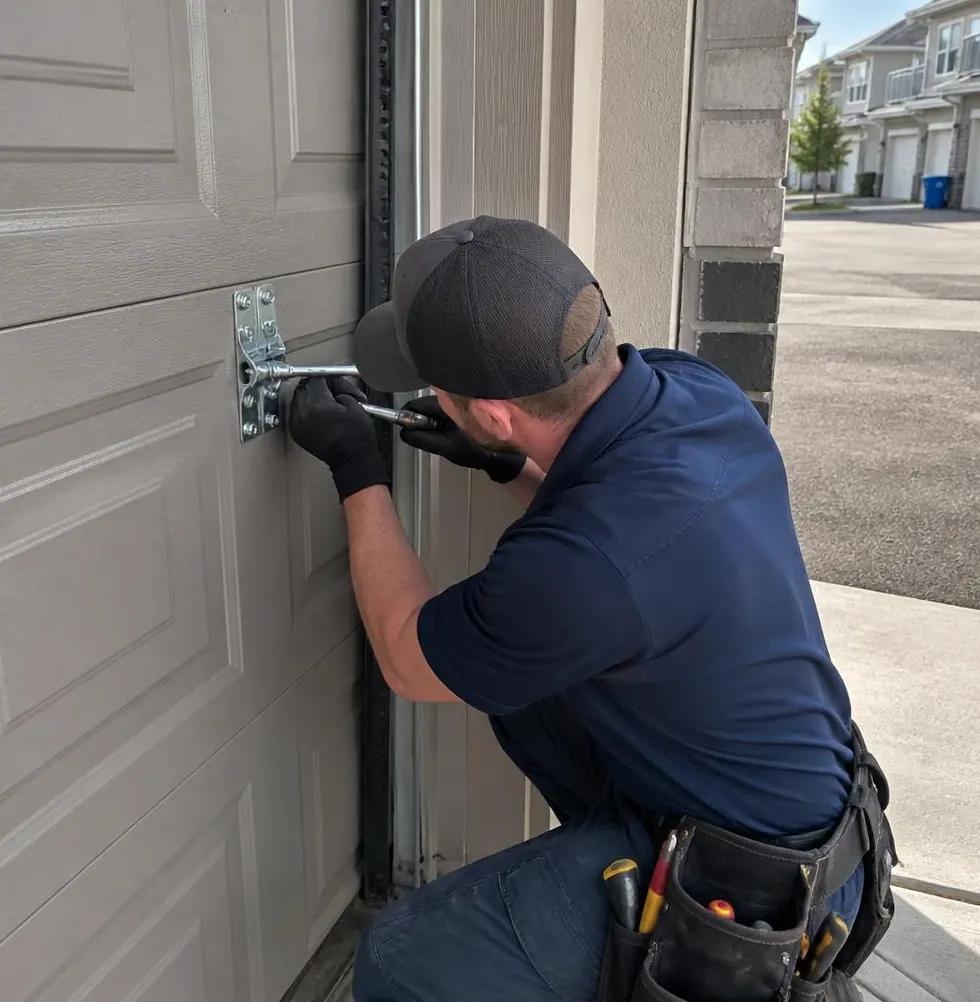
- Add a slide bolt or C-clamp lock: For manual or older doors, a slide bolt on the track prevents the door from being lifted even if the opener is bypassed.
- Treat the interior door like a front door: Solid core, a real deadbolt, and a door that actually latches. This single change closes off the most common path from garage to living space.
- Upgrade to a rolling-code opener: Modern openers generate a new code every time you use the remote, which makes code-grabbing devices useless. If your opener is more than 10–15 years old, this is usually overdue anyway.
- Keep remotes out of cars: Use a keychain remote or your phone instead of a visor clip, especially if the car sits in the driveway overnight.
- Add motion-sensor lighting: A well-lit driveway removes the cover of darkness that shorter fall and winter days provide.
A Local Wrinkle: Dry Weather and Propped-Open Doors
Dust, dry wind, and the occasional wildfire smoke that drifts through this time of year lead some homeowners to prop the garage door partway open for ventilation, especially if the garage doubles as a workshop or storage space. An open or partially open door is an obvious target, and it also lets dust and debris build up around the tracks and sensors, which can cause the door to not seat or lock properly even when it looks closed. If ventilation is the goal, a screened vent or fan is a safer fix than leaving the door cracked.
Don't Skip the Basics
Security hardware only works if the door itself is in good shape. A door that's slow to close, reverses unexpectedly, or doesn't sit flush at the bottom may not be sealing or locking the way you think it is. Worn cables, a track knocked slightly out of alignment, or a weak spring can all leave small gaps that make forced entry easier. This is also worth checking after any seismic activity, since even minor shifting can throw off alignment on older doors that haven't had a retrofit inspection.
When to Call Paramount Garage Door
If your opener still uses an old fixed-code remote, your door doesn't close flush, or you've noticed gaps, slow response, or track misalignment, it's worth having it looked at before winter. Paramount Garage Door handles Garage Door Opener Service for homeowners ready to upgrade to rolling-code or smart openers, and Cable & Track Repair for doors that have been pried, knocked out of alignment, or are no longer sealing the way they should. Both are quick fixes that close real security gaps rather than just patching symptoms.
If you're in Paramount, Bellflower, Downey, Compton, Lakewood, South Gate, Lynwood, or Long Beach and want your garage door actually checked rather than guessed at, give Paramount Garage Door a call. We'll tell you straight whether it's a quick fix or something bigger, and get it handled before the darker months set in.